


Hobby Horse Euthanasia - The World's First Interview
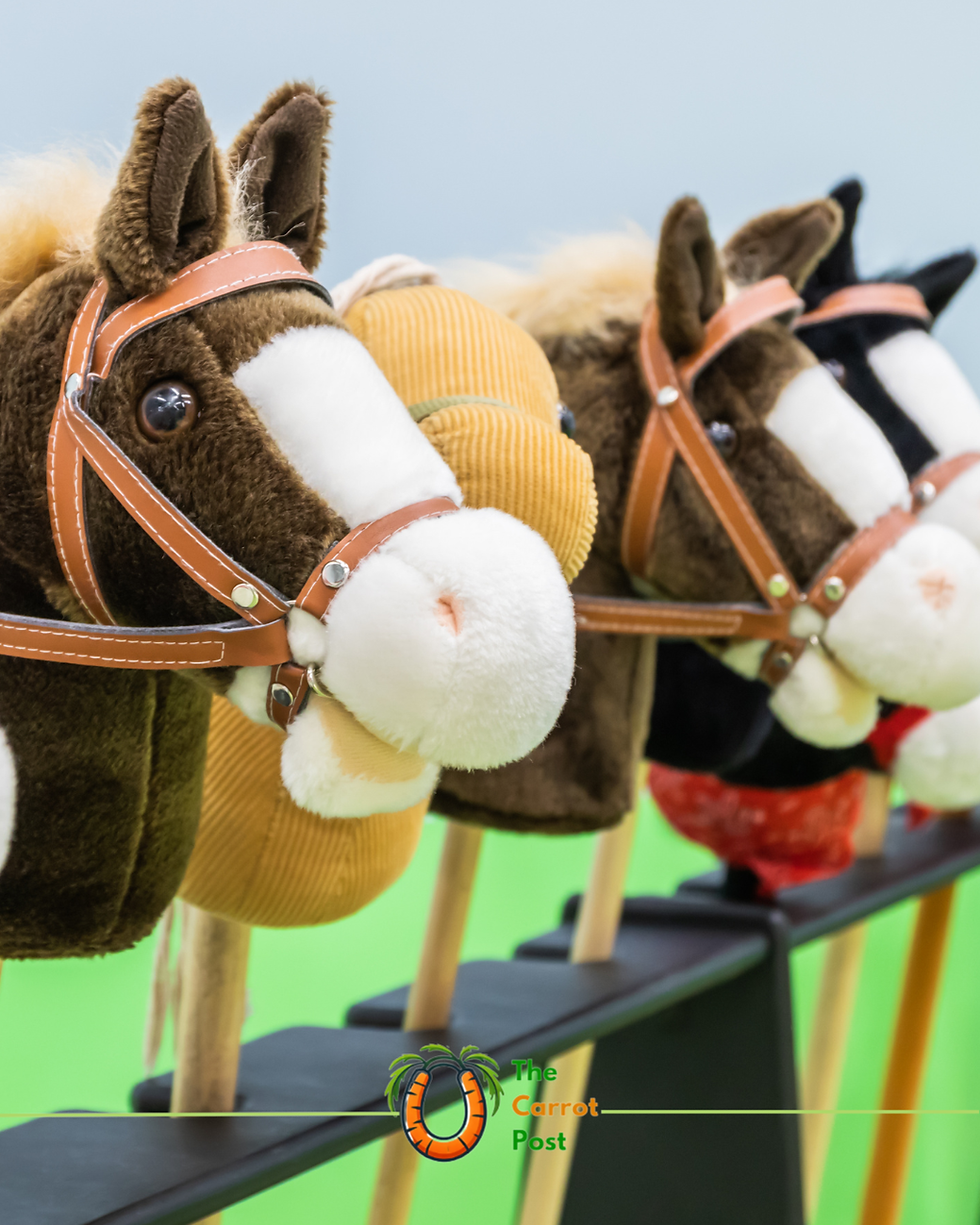
Zurich/Switzerland – Outside, the wind whips, but here, in the sterile, soundproof corridors of the Saint Velvet Clinic in Zurich, a heavy silence prevails. We find ourselves in the so-called "Room of Silence." This is not a place for athletic peak performance; it is a place where children are saying goodbye to their beloved hobby horses.
Surrounded by high-tech medical equipment and exclusive silk pouches, we met with Dr. h.c. Armin Fadenreich, the world’s leading expert in textile geriatrics and material ethics. He is the authority in a field that the glitzy world of professional hobby horsing only mentions in hushed tones: the controlled decommissioning and euthanasia of the hobby horse.
It is a topic that divides the community. While some speak merely of "material failure," experts like Fadenreich see the end of a soul made of polyester stuffing.
We sat down with him to discuss the fine line between loving restoration and the moment when a final farewell becomes an act of respect for a champion's dignity.
The Carrot Post (TCP): Dr. Fadenreich, we are standing here in the "Room of Silence" at the Saint Velvet Clinic. A place where careers come to an end. When does an owner know it’s truly time to lay the stick to rest?
Dr. Fadenreich (Dr. F): It is a creeping process. Usually, it begins with irreversible spinal fatigue. When the beechwood core develops a chronic curvature that even carbon-fiber sleeves can no longer correct, the sporting equipment loses its static integrity. But that is merely the physical dimension.
TCP: And the psychological? Or rather, the textile dimension?
Dr. F: Precisely. We refer to it as the "Great Void." When the stuffing in the muzzle area has collapsed to such an extent that the horse no longer possesses "expression." A champion that has become nothing more than a limp polyester bag suffers—not in the biological sense, but from the loss of its dignity.
TCP: Critics argue that any hobby horse can simply be "re-stuffed." Why is euthanasia often the more humane - or material-appropriate - path?
Dr. F: (sighs) Re-stuffing is the "facelift of the common man." It creates an unnatural tension that eventually bursts the seams. We call this Textile Hyperinflation. At some point, the fabric becomes so brittle that it can no longer hold new wool. At this stage, every further gallop is an ordeal for the stitching. We must ask ourselves: Do we want to preserve a legend with dignity or exploit a wreck?
TCP: What does a "scheduled decommissioning" look like at your clinic?
Dr. F: We place great emphasis on protocol. First, the bridle or halter is removed - a highly symbolic act. Then comes the decompression. We remove the stuffing in a controlled atmosphere to prevent fiber-fly. The empty shell, the "skin" of the champion, is - upon request - interred in a pretty silk pouch or thermally recycled in our high-temperature chamber.
TCP: And the stick?
Dr. F: The stick is shredded to shavings. We often donate the shavings to local equestrian stables. Thus, the circle of life closes: A great hobby horse athlete becomes the ground upon which the next generation of real horses gallops. It is the highest form of recycling.
TCP: Many owners find the sterile environment of a clinic intimidating. Do you offer alternatives for those who want to say goodbye in a more intimate setting?
Dr. F: Absolutely. We have established our "Mobile Last Care Units" for exactly that reason. Our teams travel across the world to perform the decommissioning in the comfort of the child's own bedroom. It’s vital that the hobby horse spends its final moments in a familiar environment - perhaps leaning against the same wallpaper it has known for years. We bring a portable decompression unit and, of course, a selection of velvet transport cases. It allows for a "Final Trot" in the garden or hallway, surrounded by the family, before we initiate the protocol. It is often much more peaceful for the young athletes to see their companion handled with such professional care right at home.
TCP: One final question: Are there cases of "mercy kills" right on the competition grounds?
Dr. F: We had an incident at the Grand Prix in St. Moritz. A catastrophic longitudinal splintering of the core under high-impact load. The sound was like a pistol shot. The owner wanted to have the hobby horse cremated on the spot. We were able to calm them down and initiate a discreet transfer to us. Professionalism means maintaining composure, even at the moment of total material failure.
About the Expert
Dr. h.c. Armin Fadenreich is the Chief of Material Ethics and Textile Geriatrics at the Saint Velvet Clinic in Zurich. Over the past years, he has personally overseen the "Final Stitch" and decommissioning of over 500 Grand Prix-level hobby horses.
A former consultant for international hobby horse equestrian federations, Dr. Fadenreich revolutionized the field of hobby horse euthanasia by introducing the "Decompression Protocol" and advocating for the dignity of high-performance hobby horses. He is a frequent guest speaker at global symposiums on sustainable toy lifecycles and currently resides in Zurich with his collection of retired and vintage beechwood hobby horses.


Comments